| If your food doesn't scream at you, you are probably doing it right. |
Being a Stirring Account of adventures in Tanzania of a Blood and Thunder nature tinged with a Hue of Drama and a side of Angsty Flashbacks. Sponsored by the Peace Corps, in whose service I am making the world a Better Place.
I'm done with Peace Corps. I am now spending a month as a corporate sellout in China. It's a long story.
Disclaimer
The content of this blog does not reflect the positions of the Peace Corps and is solely the responsibility of the author.
Showing posts with label food. Show all posts
Eldritch Pies: The Necronomicon
Possibly only version 1.0 or some such, since we were hindered by a lack of food coloring. Also, I envision the Necronomicon as being more of a pop-up book with tentacles coming out.
Labels:
food
From the Emotional Cookbook: Mulled Hibiscus Wine of Comfort
It's cold. I have a guest. I have wine. I can send my guest to find a small child to bribe into buying me oranges and spices, because I have reached a new level of laziness.
It was yummy, once strained. I was warm. I was happy. We had Teenage Mutant Ninja Turtles and I have bandannas for our heads. We took the obligatory stupid photos. Are adults allowed to have this much fun?
| spices typically come in little plastic packets. This is cardamom, cinnamon, and cloves. |
| A nice thing about Mbeya as opposed to Morogoro is there are no termites in my twanga. I can squish spices without dumping the sawdust out first! |
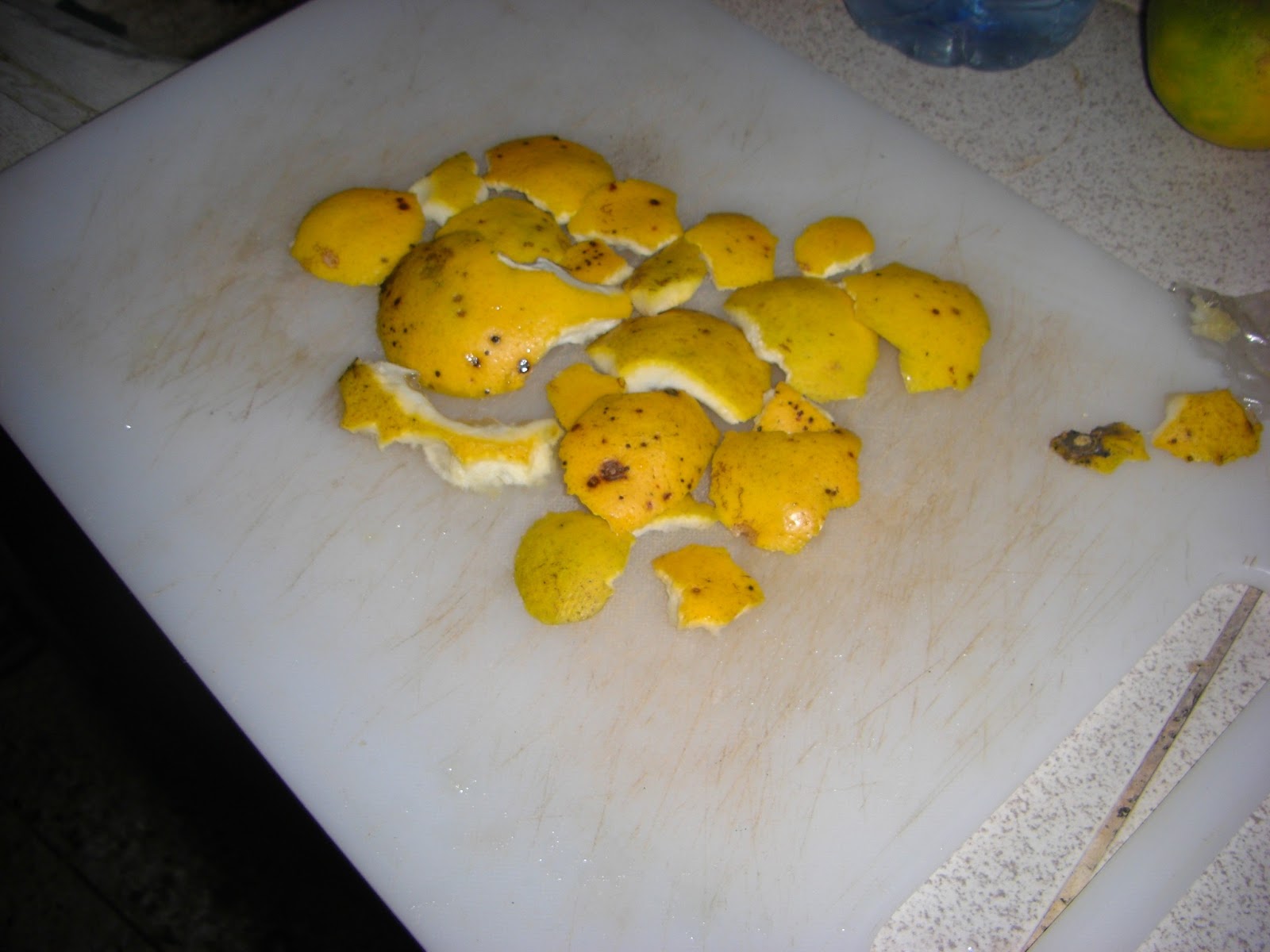
| Orange peel artfully arranged as Pangaea. |
| squished up spices, orange, and 1/13 cup sugar. |
| The recipe said 1 bottle of wine, which I decided might be around 2 500 ml water bottles dipped out of the hibiscus wine bucket. These silly people whose wine comes in bottles. |
![]() |
| For the record, this is my broom and machete. |
Labels:
food
From the Emotional Cookbook: The Boozy Baking of Unhealthy Coping Mechanisms for Sexist Cultural Norms
Get back in the kitchen Take the booze with you. But first, go shopping so you have everything you need for Lovecraftian pie and pineapple rum upside down cake. Spring for real butter, because butter is wonderful. Arrive back to find the power is out. Make Bloody Marys, full of vodka, and blessed amongst cocktails. Do some prep work and then watch cute Studio Ghibli films because laptop batteries are wonderful.
| Cut up pineapples and set to soak in rum. With coffee mug full of Bloody Mary. |
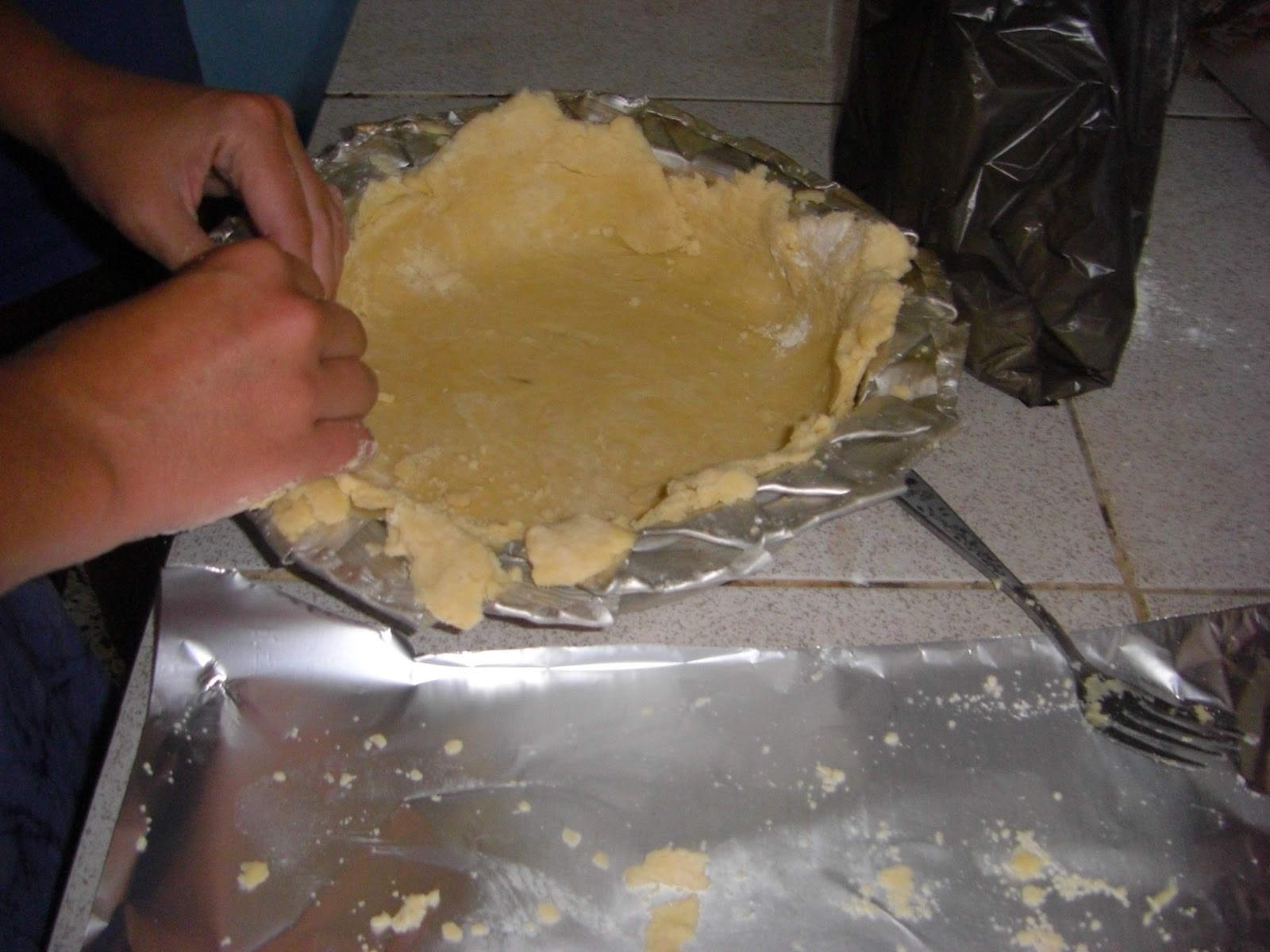
| More prep work: mixing the pie crust. McNulty looks on. The paper on the floor is for the cat to tear up, not trash. |
Eventually, the power will come back on. Create the bottom of the pie shell in the wonderful pie pan made for you by a volunteer with a leatherman, a cheap sufuria (the aluminum pans we are using in all the photos), and some spare time. Realize you need more flour, and find some small children you can pay a pittance to go fetch you more. Make them take out your trash while you are at it.
Make custard, rather the cheating way with custard powder. Realize this doesn't actually work very well, and the "custard flavoring" of the powder overwhelms the passion fruit juice you added and results in boring custard. Regret the custard-expertise of your sister in the states. Whatever. Fill the pie crust and let chill. Listen to some HP Podcraft episodes to get in the mood. Draw a picture as a guide to creating the Crawling Chaos in pie form and break out the food coloring.
| Posing with the bowls of egg whites mixed with food coloring. |
| Ink pen sketch of the Crawling Chaos. |
| Carefully cutting out dough and painting it. |
| Suckers for tentacles must be individually painted. |
| The partially assembled pie. |
| Rerolling the dough (with an empty bottle. Some people have rolling pins) |
| Ia! Crawling Chaos! Unspeakable Blasphemy! |
Eat a lot. Drink a lot. Stagger off to bed.
Labels:
food
Respect for Zanzibari Street Food
One of my favorite food blogs, Serious Eats, just did a thing on street food in Zanzibar! Also good for photos of a market, which I don't take because markets are great places to get things stolen so I never take my camera.
It is bad for me to read food blogs and realize all the wonderful things I could be eating were I not here, but I do it anyway, and dream.
Labels:
food
In Which I Think about Farming
I normally don't. I'm supposed to do some permagardening in my spare time as an example thing, but gardening is a lot of work and I live in an apartment building without a yard (which relieves my guilt about not wanting to garden). So I really don't think much about farming. My friend Veronica who sells me onions I know farms because sometimes she is at her farm rather than at the market, and then I'm sad to not see her, but that's about as much as I think about farming. Recently, however, Bible verses from Leviticus have been all over Facebook as people wait for the ruling from the Supreme Court about marriage. The typical way this conversation goes is:
1) Someone quotes the verses from Leviticus about the abominability of homosexuality.
2) Someone else quotes some other commandments from Leviticus that are either abominable to follow or just Somewhat Silly.
I saw one of the Somewhat Silly verses linked, and it reads as follows.
I never really thought about this Biblical monocropping commandment other than that it does indeed seem Somewhat Silly, except now that I have seen subsistence farming, this now seems a terrible horrible no good very bad agrarian practice. At best, it is an inefficient use of land and at worst renders the agrarian system unsustainable, so for the subsistence farmer this is malnutrition and starvation kind of bad. Let's take a bad-case and unfortunately all-too-real situation: a woman is found to be HIV positive and her husband leaves her and takes pretty much everything (because traditional marriage means the husband has all rights and the wife none) but she's lucky enough to be left with a house and a little bit of a yard. She now has to use that yard to be as self-sufficient as possible. With good farming techniques and please god the rains aren't late this can work. The typical arrangement is to grow corn together with beans. Then she has carbohydrates and protein from a sustainable agricultural plan in which the legumes are fixing nitrogen while the corn depletes it. If monocropping is dictated she can't efficiently use what little land she has to provide for as many of her needs as possible and she can't intelligently plant different crops together in order to preserve the fertility of the soil. Even in your not-quite-so-badly-off subsistence farming scenarios, we do have to work off the assumption that land is limited, and having legumes planted together with grasses is way better for the sustainability of the agrarian system. Corn is the textbook example (literally. I read about this in elementary school where they taught us that the native Americans always planted corn together with beans and squash and called it the Three Sisters and the pilgrims were totally grateful to learn it right up to the point that they genocided the natives) but even in the Levitical time when the ancient Hebrews were mostly nomadic herders anyway and corn was a generic term for grains because maize crops are an American export, monocropping is still a method that, while it may be good in some or even many situations, subsistence farming isn't really one of them.
1) Someone quotes the verses from Leviticus about the abominability of homosexuality.
2) Someone else quotes some other commandments from Leviticus that are either abominable to follow or just Somewhat Silly.
I saw one of the Somewhat Silly verses linked, and it reads as follows.
19 Ye shall keep my statutes. Thou shalt not let thy cattle gender with a diverse kind: thou shalt not sow thy field with mingled seed: neither shall a garment mingled of linen and woollen come upon thee.
I never really thought about this Biblical monocropping commandment other than that it does indeed seem Somewhat Silly, except now that I have seen subsistence farming, this now seems a terrible horrible no good very bad agrarian practice. At best, it is an inefficient use of land and at worst renders the agrarian system unsustainable, so for the subsistence farmer this is malnutrition and starvation kind of bad. Let's take a bad-case and unfortunately all-too-real situation: a woman is found to be HIV positive and her husband leaves her and takes pretty much everything (because traditional marriage means the husband has all rights and the wife none) but she's lucky enough to be left with a house and a little bit of a yard. She now has to use that yard to be as self-sufficient as possible. With good farming techniques and please god the rains aren't late this can work. The typical arrangement is to grow corn together with beans. Then she has carbohydrates and protein from a sustainable agricultural plan in which the legumes are fixing nitrogen while the corn depletes it. If monocropping is dictated she can't efficiently use what little land she has to provide for as many of her needs as possible and she can't intelligently plant different crops together in order to preserve the fertility of the soil. Even in your not-quite-so-badly-off subsistence farming scenarios, we do have to work off the assumption that land is limited, and having legumes planted together with grasses is way better for the sustainability of the agrarian system. Corn is the textbook example (literally. I read about this in elementary school where they taught us that the native Americans always planted corn together with beans and squash and called it the Three Sisters and the pilgrims were totally grateful to learn it right up to the point that they genocided the natives) but even in the Levitical time when the ancient Hebrews were mostly nomadic herders anyway and corn was a generic term for grains because maize crops are an American export, monocropping is still a method that, while it may be good in some or even many situations, subsistence farming isn't really one of them.
Labels:
food
Wine not from these Grapes
My new bucket of hibiscus wine is fermented and drinkable. Of all the wines I have made or tasted here (watermelon, papaya, mango, pineapple, ginger, stafali/soursop/topetope--they're like marshmallows in fruit form that I haven't seen in the states and everyone has different names for) hibiscus is definitely my favorite. I've heard rumors that some people make wine out of grapes, but that would just be predictable.
| You can buy little bags of dried hibiscus blossoms, they are called choya. They look sort of like crumpled dessicated bugs, but smell good. |
| Sugar. Lots of sugar. 2 kilos. |
| Boiling water, because the stuff is dried. They need to steep for a few hours in their sugary water. |
| After the water is cool, yeast. Still the most helpful organism on the planet. ****Three weeks later**** |
| It's a red wine, sweet (possibly due mostly to the 2 kilos of sugar per 10 liter wine bucket), with a floral aftertaste. Drunk out of a mug because Peace Corps is classy like that. |
| Book of verses, mug of wine, loaf of bread. Not pictured: thou. |
Labels:
food
In which I Make Ice Cream
I like ice cream. It's yummy. I have never attempted to make it before. My mama makes it a lot in the states, but she has this fancy machine to do it. I, however, have a book, with pictures, and some instructions from my chemistry minded aunt.
It is possible to get fresh milk rather than preservative filled stuff, but even boiling the milk myself, I'd still be a little hesitant after I heard about a volunteer in the Dodoma region getting tuberculosis. My entire cultural background tells me I should be dying of tuberculosis right sexily (The well-bred ladies of opera and Val Kilmer in Tombstone can't all be wrong, but they could all be painfully dead.), but I'd rather not. If only because I can't sing "Addio del Passato" like Anna Netrebkho, who makes for a consummate consumptive.
I also made bread while stirring the ice cream mixture, because I'm efficient that way. Also, I needed more bread and I needed something to throw the leftover egg whites into. I don't follow a recipe for bread, bread loves us all and wants us to be happy and will at least sort of work no matter what is done to it. Which is odd given that the one important technique is to keep the yeast warm, happy, and well-fed right up until the moment the yeast get cooked to death.
In the meantime, I'm still stirring the ice cream mixture on low heat. It's weird, it looks like it should turn into a custard, but you are supposed to stop when it's not quite custarded and chill. I'm not entirely certain I understand the chemistry of the situation.
| Book courtesy of Albert, an RPCV who preceded me at Morogoro and supports and encourages me. |
| The milk and cream are mixed and heated, but not boiled. |
| Sugar and egg yolks, with the whites set aside. |
| The instructions say whisk together, because some people have whisks. |
| Add the hot mixed cream and milk, then put it back to heating with the egg and sugar. |
I also made bread while stirring the ice cream mixture, because I'm efficient that way. Also, I needed more bread and I needed something to throw the leftover egg whites into. I don't follow a recipe for bread, bread loves us all and wants us to be happy and will at least sort of work no matter what is done to it. Which is odd given that the one important technique is to keep the yeast warm, happy, and well-fed right up until the moment the yeast get cooked to death.
| The sugary milk etc now gets to cool in a big sufuria filled with ice water plus salt, at the helpful reminder of my chemistry-minded aunt. |
| After freezing overnight, I have this. I put too much vanilla flavoring in, but it is legitimately ice cream. |
| It's just like adding milk to my morning coffee, only with a lot more fat, which is what makes things yummy. |
Labels:
food
Sonnets from the Peace Corps Volunteers: Hymn to Food
For all the people who look like they need to go back to the states and eat a sandwich or 50.
Bacon, bacon, bacon, bacon, bacon
With cheese, and biscuits flaky-cooked with grease.
In grease with milk we'll scramble eggs till done,
Then French-pressed Kona coffee ends our feast.
Our noon repast: too many sandwiches
Adorned with meats and sauces, fruits and cheeses.
Ham, gouda, pepperjack...from fridges(!)
Loaded well with condiments egregious.
Who needs a dinner when there is dessert?
Peanut butter mashed with chocolate ice cream,
An apple pie that's flaky, sweet, and tart,
Strawberry margaritas poured in streams.
Our challenge, 2 for 1, it starts today:
Gain twice the pounds we lost along the way.
A Cheese of One's Own
Like many if not most volunteers, I have developed an odd obsession with cheese. Part of my inability to keep cheese in my house has been heretofore the lack of refrigerator, a problem now remedied. The other barrier to a cheesier lifestyle is cost. The obvious solution, therefore, is to attempt my own cheese. This requires self-reliance and an understanding that cheese makes many appearances in olden times (at least in the fantasy novels I read where a rind of cheese often appears in adventurers' packs or accompanying the dinners of prisoners) and is therefore not something which can only be produced by the magical ways of the gods of the modern grocery store. Fortunately, the Peace Corps cookbook includes recipes, and as it turns out, cheese making is really easy.
| Needed: citric acid, aka lemon juice. |
| Boil milk in improvised double boiler. |
| Once the lemon juice is added, the hot milk will almost immediately separate into curds and whey, holy chemical reactions, Batman! |
| Straining through the cheesecloth that my mama thoughtfully sent me from the states. |
| The leftover whey can be used to make bread in place of water or milk. |
| Pineapple with cheese. Today, I win life. |
Labels:
food
In Praise of the Parachichi
In general, I regard Tanzanian cooks as lovely people, more patient and hardworking than I will ever be*, who need to be introduced to a spice rack. Salt, watery tomato sauce, and possibly some chili peppers on the side are the only garnishes one can usually hope for. In the case of the avocado, also known as the parachichi to them that speak the Kiswahili, salt is the only thing you actually need to make it perfectly palatable raw. They make great snacks that one can sometimes just buy off the street in slices. Fortunately they also tend to be huge and succulent. If you happen to have ground black pepper (surprisingly hard to come by, thank you darling aunt and uncle in the states) and some barbecue sauce and Jack Daniel's mustard (thank you stateside girlfriend of a volunteer in the region) the avocado makes for a perfectly delightful dish and one large enough to count, for me, as a meal. Serious Eats offers a recipe for an avocado pie, but that might be going a bit far.
*and less clumsy. I have never ever been able to scrape out a coconut without cutting the heel of my hand open.
| lunch! |
Labels:
food
In Which America is Awesome
Ok, so it's still a cesspit of classist, sexist, racist, hypocritical warmongering irrational policies, but I have Noam Chomsky to explain these things in detail. The point is, as far as the infrastructure and privilege available in America (for those with privilege, let's not pretend everyone has equal access), it is unbelievably amazing. I received a care package recently filled with candy, which is the sort of care package that makes my little heart flutter and other volunteers flock to my house with hopeful hangdog looks. As a friend of mine said, on being offered a white chocolate Reese's, "I didn't even know these existed, America is awesome!"
Indeed. And one of the things I am dreaming about in moving to a new site is a kitchen that is more like an American kitchen, because I cannot cook in a traditional way at all. I do the spoiled volunteer thing of using an electric hotplate. Which possibly explains why when I ran across this article, I choked on the inherent privilege of the author claiming she cooked in a low tech way. She has colanders, which I've only ever seen in country in the really expensive places in Dar, likewise whisks, and I'm willing to bet she has a stove that she can just turn on and it will just work regardless of electricity problems and if it's gas she never has to figure out how to get the propane tank refilled, and it's a stove on which she can cook more than one thing at a time. That steel knife she lovingly talks about is probably stainless steel and neither rusts nor loses an edge quickly. Her pots and skillets are probably not battered, thin aluminum and quite possibly non-stick and easy to clean. Now if she was cooking over charcoal, and not the nice treated American charcoal that lights easily, and had one dull knife, no cutting boards, or counters for that matter, and was just having to sit on a stool outside with the charcoal stove, old aluminum pots and using whatever thin piece of cloth is available as a hot pad, and she has to do this every single day because she doesn't have a refrigerator to store food, she would probably not be quite so fast to dismiss modern cooking technology. Actually, she probably wouldn't be so fast to dismiss it if she was even making her noodles herself; I've heard that's kind of hard.
I like cooking, I really do. I also like having the option of not cooking, or of reducing my cooking time by storing foods in a refrigerator. Having to cook every day, even in a modern kitchen (old-fashioned does not mean "lack of $600 gadgets," our author's kitchen is modern) takes a lot of time and energy and is one of the many reasons that strict gender roles hurt women. When cooking in the home is non-negotiable women's work, women then are forced to spend their time rather than being able to spend time socializing or going to school, or having hobbies, or staring at the internet, or whatever. For those who are cooking because they have the leisure and inclination, that's great. If they can make money off it, even better. I read cooking blogs, and I sometimes watch cooking shows. But let's not descend into snobbery where not taking the time to grind things with a mortar and pestle means abandoning the household god of cooking, whatever that means. (Just to continue bragging about how much worse I have it than the author, I'm betting that her mortar and pestle doesn't have termites living in it.)
I am actually kind of excited by the modern cooking that our author so casually dismisses. Using cold as a way to fry things without grease? That sounds like it could make the lives of fast food workers so much better, since standing over a fryer sounds disgusting and not that much fun. Granted I am getting this impression from the season of Buffy the Vampire Slayer where Buffy goes to work for minimum wage in a generic fast food burger place, and one of her coworkers tells her that he periodically has to have the balled up grease in his ears removed so he can even hear, and after she works there for a while vampires refuse to even try biting her because she smells bad. Regardless of the not overly credible nature of my source, cooking with cold instead of heat sounds, just offhand, safer, both through reduced risk of grease fires and by not tempting people to keep reusing frying oil because oil is expensive. The diarrhea I get from fried foods here is just disgusting. The fact that cooking without heat is even an option (albeit for the very rich, who is she friends with that has this stuff? or for evil corporations offering food-like substances for low prices, which is where I could really see this technology being used), is awesome.
Finally, the digital age does offer us a lot with cooking, it offers us knowledge! When cooking is something passed down from mother to daughter only, there aren't going to be many innovations in food. For example, something that is not part of the cultural knowledge in Tanzanian cooking is preprocessing beans, by which I mean letting them soak for a while rather than trying to just cook them. Just doing that makes cooking beans so much quicker, but how does one know that if it isn't part of the transmitted cultural knowledge? Likewise, I've discussed my love of cheese with a Tanzanian lady, who told me that it isn't that people don't like cheese, they just don't know what to do with it, because no one ever cooks with it, so how are they supposed to learn? In the US I tried a lot of new recipes, some of which I got from books, but most of which I found on the internet. While here, I can figure out how to do things like make wine in buckets and roast my own coffee because I have the internet. That in itself is a huge privilege not to be underestimated. With food preparation, as with so many other things, the digital age gives us access to more information than some people see in their entire lifetimes, and that can't and shouldn't be casually dismissed for the sake of a kitchen that smells exactly the same as one's progenitor's.
Indeed. And one of the things I am dreaming about in moving to a new site is a kitchen that is more like an American kitchen, because I cannot cook in a traditional way at all. I do the spoiled volunteer thing of using an electric hotplate. Which possibly explains why when I ran across this article, I choked on the inherent privilege of the author claiming she cooked in a low tech way. She has colanders, which I've only ever seen in country in the really expensive places in Dar, likewise whisks, and I'm willing to bet she has a stove that she can just turn on and it will just work regardless of electricity problems and if it's gas she never has to figure out how to get the propane tank refilled, and it's a stove on which she can cook more than one thing at a time. That steel knife she lovingly talks about is probably stainless steel and neither rusts nor loses an edge quickly. Her pots and skillets are probably not battered, thin aluminum and quite possibly non-stick and easy to clean. Now if she was cooking over charcoal, and not the nice treated American charcoal that lights easily, and had one dull knife, no cutting boards, or counters for that matter, and was just having to sit on a stool outside with the charcoal stove, old aluminum pots and using whatever thin piece of cloth is available as a hot pad, and she has to do this every single day because she doesn't have a refrigerator to store food, she would probably not be quite so fast to dismiss modern cooking technology. Actually, she probably wouldn't be so fast to dismiss it if she was even making her noodles herself; I've heard that's kind of hard.
I like cooking, I really do. I also like having the option of not cooking, or of reducing my cooking time by storing foods in a refrigerator. Having to cook every day, even in a modern kitchen (old-fashioned does not mean "lack of $600 gadgets," our author's kitchen is modern) takes a lot of time and energy and is one of the many reasons that strict gender roles hurt women. When cooking in the home is non-negotiable women's work, women then are forced to spend their time rather than being able to spend time socializing or going to school, or having hobbies, or staring at the internet, or whatever. For those who are cooking because they have the leisure and inclination, that's great. If they can make money off it, even better. I read cooking blogs, and I sometimes watch cooking shows. But let's not descend into snobbery where not taking the time to grind things with a mortar and pestle means abandoning the household god of cooking, whatever that means. (Just to continue bragging about how much worse I have it than the author, I'm betting that her mortar and pestle doesn't have termites living in it.)
I am actually kind of excited by the modern cooking that our author so casually dismisses. Using cold as a way to fry things without grease? That sounds like it could make the lives of fast food workers so much better, since standing over a fryer sounds disgusting and not that much fun. Granted I am getting this impression from the season of Buffy the Vampire Slayer where Buffy goes to work for minimum wage in a generic fast food burger place, and one of her coworkers tells her that he periodically has to have the balled up grease in his ears removed so he can even hear, and after she works there for a while vampires refuse to even try biting her because she smells bad. Regardless of the not overly credible nature of my source, cooking with cold instead of heat sounds, just offhand, safer, both through reduced risk of grease fires and by not tempting people to keep reusing frying oil because oil is expensive. The diarrhea I get from fried foods here is just disgusting. The fact that cooking without heat is even an option (albeit for the very rich, who is she friends with that has this stuff? or for evil corporations offering food-like substances for low prices, which is where I could really see this technology being used), is awesome.
Finally, the digital age does offer us a lot with cooking, it offers us knowledge! When cooking is something passed down from mother to daughter only, there aren't going to be many innovations in food. For example, something that is not part of the cultural knowledge in Tanzanian cooking is preprocessing beans, by which I mean letting them soak for a while rather than trying to just cook them. Just doing that makes cooking beans so much quicker, but how does one know that if it isn't part of the transmitted cultural knowledge? Likewise, I've discussed my love of cheese with a Tanzanian lady, who told me that it isn't that people don't like cheese, they just don't know what to do with it, because no one ever cooks with it, so how are they supposed to learn? In the US I tried a lot of new recipes, some of which I got from books, but most of which I found on the internet. While here, I can figure out how to do things like make wine in buckets and roast my own coffee because I have the internet. That in itself is a huge privilege not to be underestimated. With food preparation, as with so many other things, the digital age gives us access to more information than some people see in their entire lifetimes, and that can't and shouldn't be casually dismissed for the sake of a kitchen that smells exactly the same as one's progenitor's.
Labels:
food
Emotional Chocolate and Peanut Butter Cake
Not bad for fake butter and that weird long life milk stuff (that's at least better than powdered milk) and so-so hot chocolate drink mix. The peanut butter, however, was awesome, as it came in a box from that magical land in which peanut butter is sweet and has all sorts of strange compounds added to keep the oil from separating out. Only fancy, there are places in the world with different types of peanut butter!
The magical marvelous sufuria oven.
Labels:
food
In Which I Make a Cake
It was a basic yellow cake, a little funny tasting because I do not buy real butter without a refrigerator, and I have yet to find a source of real milk, but I made frosting for it that was pretty much entirely liquid, and it's not a pretty cake, but it was a genuine actual cake, and it was for my birthday, and it was yummy.
In addition, I bought oranges, which are green not orange, but they are oranges, and hollowed them out jack-o-lantern wise and spooned cake batter into them and cooked them inside the oranges, to make itty bitty adorable citrusy cakelet things. The downside being that it takes forever to cook, at least if you are doing it in a sufuria over a hot plate, and the juice tends to bubble over and burn and make a huge mess.
Labels:
food
In Which I Inquire about Aspects of the US Food Infrastructure that I Never Thought About Before
In the US, why:
- Are there never dead bees in the honey?
- Are there no rocks in the rice?
- Are the eggs never covered in fecal material?
Labels:
food
From the Emotional Cookbook: Baba Ghanouj of Optimism Served on the Chapatis of Inadequacy
(recipes taken from the Peace Corps cookbook, which is awesome).
Boil an eggplant into submission, then mash into a pulp while thinking of the children who yell 'give me money' when you pass.
Add some amount of salt that you think may be around a teaspoon. Add the juice of however many lemons you happen to have around and as much garlic as possible. If you have such a thing, add tahini paste, otherwise peanut butter is just ducky. Mix until it looks and tastes the way you like your baba ghanouj, which is a personal matter.
Prepare the chapati. Mix together flour, oil, and water with a little bit of salt, until it is a rollable dough, which you should roll into circles.
spread oil over the top, roll up into little balls and then out into flat circles again. Fry in butter substitute.
Spoon large amounts of baba ghanouj onto the chapatis. Eat piggishly.
Boil an eggplant into submission, then mash into a pulp while thinking of the children who yell 'give me money' when you pass.
Add some amount of salt that you think may be around a teaspoon. Add the juice of however many lemons you happen to have around and as much garlic as possible. If you have such a thing, add tahini paste, otherwise peanut butter is just ducky. Mix until it looks and tastes the way you like your baba ghanouj, which is a personal matter.
Prepare the chapati. Mix together flour, oil, and water with a little bit of salt, until it is a rollable dough, which you should roll into circles.
| This is better with white flour, but I was out. |
| some people have actual rolling pins. |
spread oil over the top, roll up into little balls and then out into flat circles again. Fry in butter substitute.
| My frying skills are terrible. |
Labels:
food
Subscribe to:
Posts (Atom)